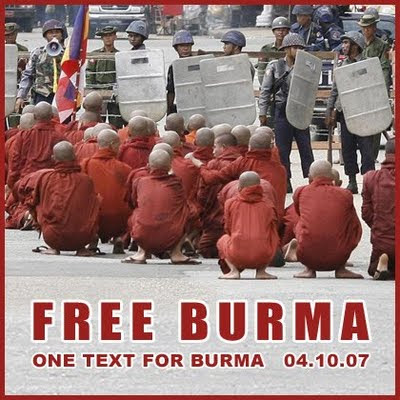
Translation in your mothers language

Sunday, November 14, 2010

Pakistan used terror as a hedge against India: Clinton

source MSN
13/11/2010

Pakistan used terror as a hedge against India: Clinton

Washington: Islamabad used to support terror outfits as a hedge against India and an unfriendly Afghan regime, so that the two neighbours of Pakistan do not undermine it, US Secretary of State Hillary Clinton has said. “They (Pakistan) have in the past hedged against both India and an unfriendly regime in Afghanistan by supporting groups that will be their proxies in trying to prevent either India or an unfriendly Afghan government from undermining their position,” she said.

Pakistan used terror as a hedge against India: Clinton

Clinton said now things are "changing", but she cannot confirm whether Pakistan has stopped the use of terror against India and Afghanistan. "That is changing... Now, I cannot sit here and tell you that it has changed, but that is changing," she told ABC News in an interview, the transcripts of which was released by the State Department.

Clinton accepted that the US had created certain radical outfits and supported terrorists like Osama bin Laden to fight against the erstwhile Soviet Union, but that backing has boomeranged. "Part of what we are fighting against right now, the United States created. We created the Mujahidin force against the Soviet Union (in Afghanistan). We trained them, we equipped them, we funded them, including somebody named Osama bin Laden. And it didn't work out so well for us," she said.

The Secretary of the State also said Pakistan is paying a "big price" for supporting US war against terror groups in their own national interest. "But I think it is important to note that as they have made these adjustments in their own assessment of their national interests, they're paying a big price for it," Clinton said.

"And it's not an easy calculation for them to make. But we are making progress (in Afghanistan). We have a long way to go and we can't be impatient...Well, the headlines are bad. We're going home. We cannot do that," she said.

Appearing on the same ABC show, Secretary of Defence Robert Gates said Pakistan has withdrawn an equivalent of about six divisions of its army from the Indian border and moved them. "And they are attacking the Taliban. They're attacking the Taliban -- Tehrik-i-Taliban Pakistan, and safe havens that are a problem for us," Gates said.

"But the other piece of this, we face in both countries what they call a trust deficit, and it is because they believe we have walked away from them in the past at the toughest moments of their history. "You can't recreate that (trust) in a heartbeat. You can't recreate that in a year or two. They both worry that once we solve the problem in Afghanistan, or if we don't solve it, that either way, we will leave and leave whatever remains in their hands to deal with," he added.

Source: PTI

Cheers as freed Myanmar democracy leader appears

14/11/2010

Cheers as freed Myanmar democracy leader appears

Yangon: — Myanmar's democracy icon Aung San Suu Kyi, freed from seven years of house arrest, told thousands of wildly cheering supporters Sunday that she would continue to fight for human rights and the rule of law in the military-ruled nation. She spoke to about 5,000 people who crowded around the dilapidated headquarters of her political party, the first stop for the Nobel Peace Prize laureate after leaving the lakeside residence that had been her prison.

Cheers as freed Myanmar democracy leader appears

"I believe in human rights and I believe in the rule of law. I will always fight for these things," she said. "I want to work with all democratic forces and I need the support of the people." Suu Kyi earlier slipped into the small compound of her National League for Democracy as people shouted "We love Suu" amid thunderous applause.

Inside, she met with Yangon-based diplomats and was later scheduled to talk with the media, attend the funeral of a close friend and pay a customary visit to the city's sacred Shwedagon pagoda. "This is an unconditional release. No restrictions are placed on her," her lawyer Nyan Win said. There was speculation whether she would use her newfound freedom to challenge the ruling military head-on, or be more conciliatory.

In her Sunday speech, she did not sound a strident note, speaking about working toward national reconciliation and saying she bore no grudge against those who had held her in detention for more than 15 of the last 21 years. She thanked her well-wishers and asked them to pray for those still imprisoned by the regime. Human rights groups say the junta hold more than 2,200 political prisoners.

India, UN hail Aung San Suu Kyi's release
When Congress headquarters was Suu Kyi's home

Cheers as freed Myanmar democracy leader appears

In her first public appearance Saturday evening, Suu Kyi indicated she would continue with her political activity but did not specify whether she would challenge the military with mass rallies and other activities that led to her earlier detentions. "We have a lot of things to do," said Suu Kyi, the 65-year-old charismatic and relentlessly outspoken woman who has come to symbolize the struggle for democracy in the isolated and secretive nation once known as Burma. The country has been ruled by the military since 1962.

But while her release thrilled her supporters -- and also clearly thrilled her -- it came just days after an election that was swept by the ruling junta's proxy political party and decried by Western nations as a sham designed to perpetuate authoritarian control. Many observers have questioned whether it was timed by the junta to distract the world's attention from the election. It is also unlikely that the ruling generals will allow Suu Kyi, who drew huge crowds of supporters during her few periods of freedom, to actively and publicly pursue her goal of bringing democracy to Myanmar.

While welcoming the release, European Commissioner Jose Manuel Barroso urged that no restrictions be placed on her. "It is now crucial that Aung San Suu Kyi has unrestricted freedom of movement and speech and can participate fully in her country's political process," he said.

Cheers as freed Myanmar democracy leader appears

President Barack Obama called Suu Kyi "a hero of mine." "Whether Aung San Suu Kyi is living in the prison of her house, or the prison of her country, does not change the fact that she, and the political opposition she represents, has been systematically silenced, incarcerated, and deprived of any opportunity to engage in political processes," he said in a statement.

Others in Myanmar hailed Suu Kyi as the only one who might unite the poor, isolated country. "She's our country's hero," said Tin Tin Yu, a 20-year-old university student, standing near the house later Saturday night. "Our election was a sham. Everyone knows it, but they have guns so what can we do? She's the only one who can make our country a democracy."

Critics say the Nov 7 elections were manipulated to give the pro-military party a sweeping victory. The new government is unlikely to win the international legitimacy that it craves simply by releasing Suu Kyi because the recent elections were so obviously skewed, according Trevor Wilson, former Australian ambassador to Myanmar. What happens next will depend on what kind of restrictions the regime puts on Suu Kyi -- and what she says if she is allowed to speak, said Wilson. "We will have to wait and see. It could be a little bit of a cat-and-mouse game," Wilson said.

Cheers as freed Myanmar democracy leader appears

Suu Kyi has said she would help probe allegations of voting fraud, according to Nyan Win, who is a spokesman for her party, which was officially disbanded for refusing to register for the polls. Such actions have provoked military crackdowns in the past. Myanmar's last elections in 1990 were won overwhelmingly by her National League for Democracy, but the military refused to hand over power and instead clamped down on opponents.

Suu Kyi was convicted last year of violating the terms of her previous detention by briefly sheltering an American man who swam uninvited to her lakeside home, extending a period of continuous detention that began in 2003 after her motorcade was ambushed in northern Myanmar by a government-backed mob.

Suu Kyi took up the democracy struggle in 1988, as mass demonstrations were breaking out against 25 years of military rule. She was quickly thrust into a leadership role, mainly because she was the daughter of Aung San, who led Myanmar to independence from Britain before his assassination by political rivals.

Cheers as freed Myanmar democracy leader appears

She rode out the military's bloody suppression of street demonstrations to help found the NLD. Her defiance gained her fame and honour, most notably the 1991 Nobel Peace Prize. In 1989, she was detained on national security charges and put under house arrest. Out of the last 21 years, she has been jailed or under house arrest for more than 15.

Suu Kyi's freedom had been a key demand of Western nations and groups critical of the military regime's poor human rights record, which includes the continued detention of some 2,200 political prisoners and brutal military campaigns against ethnic minorities. The military government, seeking to burnish its international image, had responded previously by offering to talk with her, only to later shy away from serious negotiations.

Source: AP

xxxxxxxxxxxxxxxxxxxxxxxxxxxxxxxxxxxxxxxx

Jammu and Kashmir removed from list of disputes under UN

Betwa Sharma
United Nations, Nov 14 (PTI) In a significant development, Jammu and Kashmir has been removed from the UN list of unresolved disputes, giving a setback to Pakistan which has been asking the world body to intervene on the issue.

The omission of Jammu and Kashmir from a list of disputes under the observation of the UN Security Council was noticed by Pakistan whose envoy has lodged a protest.

"Jammu and Kashmir dispute was not mentioned in the context of unresolved long-running situations," said Amjad Hussain B Sial, Pakistan'' acting envoy to the UN.

"We understand this was an inadvertent omission, as Jammu and Kashmir is one of the oldest disputes on agenda of the Security Council," he added.

Sial was speaking at the UN General Assembly session, which was discussing the functioning and reform of the Security Council. It was organised by the UK that holds the presidency of the Security Council this month.

Pakistan has been asking the UN to intervene to help resolve the issue but India has always maintained that it has to be resolved bilaterally between the two countries.

Saturday, November 13, 2010

Arundhati Roy speaks her mind trash

Arundhuti Roy is speaking trash for her personal gain. And she wants some cheap media publicity. We are sorry for Arundhuti , Though we support freedom of expression but her expression are such a low and irresponsible act on the face of people who esteemed her as a great writer. She is using and exploiting some anti-social sentiment to a broader field and showing her courage to insult a biggest democratic country marked as one nation.
It is India which thinks democracies
thrive on dissent.
India claims to be the biggest democracy on earth, and that democracy is alive and kicking, at least, in India, if not in Jammu and Kashmir. Demand of a genuine democracy is that people must be allowed to express their views without fear or intimidation; and Arundhati Roy is an Indian citizen, so she is enjoying her democratic right!

On the other hand Pakistan also occupies two parts of State of Jammu and Kashmir, namely Azad Kashmir and Gilgit Baltistan, from which Pakistan generously gave away around 2200 sq miles to China in 1963 to improve bilateral relations.
Pakistan has military strength to control the Kashmiri territory under its occupation, but has no legal cover to justify this occupation. It has no legal mandate to be in control of the Kashmiri territory, but still has managed to divert attention away from areas under its control and call them 'azad' meaning free; and many Kashmiri collaborators happily advance the cause of Pakistan.


Many in Pakistan, especially writers and scholars know shallowness of Pakistan's stand on Kashmir. They also know that people of so called Azad Kashmir and Gilgit Baltistan are not happy with what Pakistan and its secret agencies do to the people of these areas; and yet they decide to remain quiet. Their conscience does not trouble them, and they follow the government policy on issue of Kashmir. They happily promote government's version on Kashmir, knowing well that it is based on lies.
They know, as it has been confirmed by many impartial surveys that people of Jammu and Kashmir DONOT want to join Pakistan; and yet they broadcast lies that people of Jammu and Kashmir are desperate to join Pakistan. They are reluctant to speak about plight and exploitation of the people living under Pakistani occupation; and will only focus on events taking place on other side of the LOC.


Can Pakistani society produce one prominent writer, scholar and human rights champion who has guts to challenge Pakistan's Kashmir policy; and tell the world that Pakistan's control of Kashmiri territory is not legal? Someone who could tell the world people of Jammu and Kashmir State living on this side of the LOC are also deprived of their fundamental human rights. Or is this too much to ask, and Pakistani writers, intellectuals and scholars will continue to follow the out of date policy of Islamabad?

( Source kashmirawareness)


26/10/2010

Kashmir has never been part of India: Arundhati Roy

Allahabad: Booker prize winner and activist has whipped up yet another storm by stating rather vocally that Kashmir was never a part of India.

Kashmir has never been part of India: Arundhati Roy

The Jammu and Kashmir Police is looking into the controversial speech of Arundhati Roy on Jammu and Kashmir's accession to India and does not rule out taking action against the high profile writer and activist. In fact, sources in the government said that a case under 124-A under Indian Penal Code for sedition is possible against Hurriyat Conference Chairman Syed Ali Shah Geelani and writer Arundhati Roy for their anti-India speeches.

J&K Police looking into controversial speech

The Jammu and Kashmir Police is looking into the controversial speech of Arundhati Roy on Jammu and Kashmir's accession to India and does not rule out taking action against the high profile writer and activist.

Highly-placed sources in the state home department said the transcript of the speech delivered yesterday at a seminar 'Wither Kashmir: Freedom or enslavement' organised by Coalition of Civil Societies (CCS) here has been handed over to the legal department for examination.

Meanwhile, the law officers of Delhi Police have concluded that there is a case for booking writer Arundhati Roy and hardline separatist leader Syed Ali Shah Geelani for sedition under Section 124A of the Indian Penal Code. But the decision on whether to actually take action will be made only after further consultations at the highest level, sources in the Home Ministry said.

Delhi Police sources said they had sought legal opinion on the nature of charges, if any, against Geelani and Roy, and clearance from the Home Ministry.

Kashmir has never been part of India: Arundhati Roy

If legal opinion favours registering a case against the Booker prize winner, the state police would register the same, sources said. Roy is alleged to have questioned Jammu and Kashmir's accession to India.

"Kashmir has never been an integral part of India. It is a historical fact. Even the Indian government has accepted this," she said, and also alleged that New Delhi became a "colonising power" soon after its independence from British rule.

This is not the first time the writer has run into rough weather over her speeches. Earlier, her pro-Naxal write up and speeches had forced Chattisgarh Police to seriously think of booking her for waging war against the country.

On another occasion, Biswajit Mitra, a former BSP leader, had accused her of supporting naxals and demanded action against her following which Director General of Chattisgarh Police Vishwa Ranjan had asked the state legal department to give their opinion.

Kashmir has never been part of India: Arundhati Roy

Roy has come under criticism for her article on naxals -- "Gandhian with guns". The Chief of Chattisgarh Police had said in April this year, "I do not know whether Arundhati Roy has been wrongly influenced by others or she is actually a mole in the civil society. How do I know?"

Cong wants Arundhati to withdraw J&K statement

A senior Congress leader asked noted writer and activist Arundhati Roy to withdraw her statement on Kashmir, saying it was 'contrary to historical facts' and could mislead the nation and the international community.

Reacting to the comment made by the writer at a seminar in Kashmir on Sunday, AICC member Satya Prakash Malaviya said, "It was really surprising to see such an irresponsible statement from someone who is one of the country's best-known writers.

Kashmir has never been part of India: Arundhati Roy

"She must withdraw her statement which is contrary to historical facts and could mislead the nation as well as the international community," he said. The Booker Prize winning author had said "Kashmir has never been an integral part of India. It is a historical fact. Even the Indian government has accepted this."

The former Union Minister said that Roy "would do better to brush up her knowledge of history and know that the princely state of Jammu and Kashmir had acceded to the Union of India after its erstwhile ruler Maharaja Hari Singh duly signed the Instrument of Accession on October 26, 1947.

"And the state, consequently has become as much an integral part of India as all the other erstwhile princely states have."

Source: Agencies

Friday, November 12, 2010

Eggs with the oldest known embryos of a dinosaur found

Eggs with the oldest known embryos of a dinosaur found
By Katia Moskvitch Science reporter, BBC News


An artist's impression of what the dinosaurs might have looked like

Palaeontologists have identified the oldest known dinosaur embryos, belonging to a species that lived some 190 million years ago.

The eggs of Massospondylus, containing well-perserved embryos, were unearthed in South Africa back in 1976.

The creature appears to be an ancestor of the family that includes the long-necked dino once known as Brontosaurus.

The study in the Journal of Vertebrate Paleontology also sheds light on the dinosaurs' early development.

The researchers used the embryos to reconstruct what the dinosaurs' babies might have looked like when they roamed the Earth.

Having studied the fossilised eggs, the team, led by Professor Robert Reisz of the University of Toronto Mississauga in Canada, discovered that the embryos were the oldest ones ever found of any land-dwelling vertebrate.

"This project opens an exciting window into the early history and evolution of dinosaurs," said Professor Reisz.

"Prosauropods are the first dinosaurs to diversify extensively, and they quickly became the most widely spread group, so their biology is particularly interesting as they represent in many ways the dawn of the age of dinosaurs."
'Awkward' bodies

Massospondylus belonged to a group of dinosaurs known as prosauropods, the ancestors of sauropods - huge, four-legged dinosaurs with long necks.

Having studied the tiny (20cm-long) skeletons, the researchers noted that the embryos were almost about to hatch - but never had the chance.


While the embryos are only about 20cm long, the adults are thought to have reached some five metres in height

Interestingly, the report says, the embryos looked quite different compared to the adult animals.

Once hatched, the babies would have had rather long front legs, meaning that they would have been walking on all fours rather than on two legs like the adults.

The embryos' heads were also disproportionally big, but it is believed the adult Massospondylus, which were about five metres in length, had relatively tiny heads and long necks.

The little ones' anatomy would have changed with age.

The paper stated that the rather awkward body of the embryos suggested that just like humans, the hatchlings would have required parental care - and if in this case, it would be the earliest known example of parental care.

Burma generals 'sign Aung San Suu Kyi release order'


Burma generals 'sign Aung San Suu Kyi release order'

Aung San Suu Kyi has been detained for 15 of the past 21 years

Reports from Burma say military authorities have signed an order authorising the release of pro-democracy leader Aung San Suu Kyi.

But hopes she would be freed on Friday were dashed: there has been no official confirmation of a release order.

A leader of her NLD party told 2,000 supporters gathered at its headquarters to go home and return on Saturday.

Ms Suu Kyi has been detained for 15 of the past 21 years, and her house arrest term expires on Saturday.

There has been increased police activity outside her house in Rangoon, Burma's largest city, but no formal statement from military officials.

However, Ms Suu Kyi is not expected to accept a conditional release if it excludes her from political activity.

The 65-year-old was originally due to be released last year, but a case involving an American who swam across Inya Lake to her home, claiming he was on a mission to save her, prompted the latest 18-month detention.

'Significant impact'

The BBC is banned from reporting in Burma but correspondent Alastair Leithead is monitoring developments from the capital of neighbouring Thailand, Bangkok.
~~~~~~~~~~~~~~~~~~~~~~~~~~~~~~~~~~~~~~~~~~
At the scene
A correspondent BBC News, Rangoon

All day rumours have circulated that Aung Sang Suu Kyi could soon be free, and all day the crowds outside the offices of the NLD have grown.

The building is constantly watched by government intelligence agents, yet still they came, defiantly wearing white T-shirts emblazoned with the face of their icon.

News spread that the papers for Aung Sang Suu Kyi's release had been signed, though no one could actually confirm that, the anticipation grew.

The crowd moved off along the road towards the lakeside house that has been the pro-democracy leader's prison for so long.

Then the word came that the release would not after all be today, but perhaps tomorrow, and still no official statement from the military government.

Aung Sang Suu Kyi and her loyal supporters must, it seems, wait a little longer.
~~~~~~~~~~~~~~~~~~~~~~~~~~~~~~~~~~~~~~~~~~~~~~``
He says a number of sources inside Burma have told the BBC that documents authorising Ms Suu Kyi's release have been signed.

Officials have reportedly visited her home in University Avenue to deliver them.

About 2,000 of her supporters gathered at NLD headquarters in anticipation of her release. Some wore T-shirts saying: "We stand with you."

"Young and old, NLD members and non-members are gathering here with excitement to welcome her. At one point, we got the news that she was released and we all shouted with joy," Yazar, an NLD youth leader, told the BBC's Burmese service.

But by early evening a party leader told people to go home because it seemed unlikely she would be freed on Friday.

A man waiting outside the gate to Ms Suu Kyi's home said little had changed.

"People are waiting in groups here and there, maybe more than 100 in total - many of them are journalists," he told the BBC. "Security is normal as usual. No increase. The gate is closed as before, that's it."
A vehicle passes a checkpoint near the home of Aung San Suu Kyi (12 November 2010) Witnesses said there had been no increased security outside Ms Suu Kyi's home in Rangoon

Ms Suu Kyi's lawyer said: "There is no law to hold her for another day. Her detention period expires on Saturday and she will be released."

"They should release her for the country," Nyan Win added.

Earlier this week, he told the BBC that she would "not accept a limited release".

"[It] must be unconditional. As we all know, she never accepted limited freedom in the past."

Nyan Win said she would meet with the NLD's central committee, members of the media and the public once she was freed.

The British ambassador to Burma, Andrew Heyn, has told the BBC that the UK and EU are pressing hard for Ms Suu Kyi's unconditional release, and that her freedom would have a "significant impact".

~~~~~~~~~~~~~~~~~~~~~~~~~~~~~~~
Aung San Suu Kyi

* Born 1945, daughter of Burma's independence hero, General Aung San assassinated in 1947
* 1960: Leaves Burma and is later educated at Oxford University
* 1988: Returns to care for sick mother and is caught up in revolt against then-dictator Ne Win
* 1989: Put under house arrest as Burma junta declares martial law
* 1990: NLD wins election; military disregards result
* 1991: Wins Nobel Peace Prize
* 1995: Released from house arrest, but movements restricted
* 2000: Near continuous period of house arrest begins
* Sept 2007: First public appearance since 2003, greeting protesting Buddhist monks
* November 2010: NLD boycotts first election in 20 years and is disbanded
~~~~~~~~~~~~~~~~~~~~~~~~~~~~~~

Boycott
The increasing speculation that the ruling generals may sanction Aung San Suu Kyi's release follows the country's first elections in 20 years on Sunday.

On Thursday, state media announced that partial results showed that the biggest military-backed party, the Union Solidarity and Development Party (USDP), had secured a majority in both houses of parliament.

The USDP had won 190 of the 219 seats so far declared in the 330-seat lower House of Representatives, and 95 of 107 seats in the 168-seat upper House of Nationalities, the reports said.

Those elected included the leader of the USDP, Prime Minister Thein Sein, who retired from the military as a general in April to stand.

The junta has said the election marks the transition from military rule to a civilian democracy, but the opposition, many Western governments and human rights groups have said the election was neither free nor fair.

The NLD - which won the last election in 1990 but was never allowed to take power - was ordered to dissolve after refusing to take part.

A quarter of seats in the two new chambers of parliament will be reserved for the military. Any constitutional change will require a majority of more than 75% - meaning that the military will retain a casting vote.
Source : BBC
xxxxxxxxxxxxxxxxxxxxxxxxxxxxxxxxxxxx

Aung San Suu Kyi, soon to be released, faces tough political landscape in Burma

By Tim Johnston
Friday, November 12, 2010; 12:09 PM

BANGKOK - For much of the past 20 years, a crumbling villa on the shores of Rangoon's Lake Inya has been both home and prison to Aung San Suu Kyi, the focal figure in Burma's long struggle for democracy.

Her latest term of house arrest, imposed last year for allowing an exhausted and possibly mentally ill American tourist to stay the night after he swam across the lake, expires Saturday. If she is released, as is expected, it will be into a country suffering its latest bout of dashed hopes for democracy.

Suu Kyi, 65, remains by all accounts unbowed. She has spent the past seven years at the home on Rangoon's University Avenue that she inherited from her father, independence hero Aung San, with only housekeepers for company.

"The energy is still there; the commitment is still there. She has all the things that everyone says - she's poised and elegant and a very impressive figure - but she's also well-informed," said Andrew Heyn, the British ambassador to Burma (also known as Myanmar) and one of few foreigners to have met with Suu Kyi recently. "The message I got when I spoke to her, not only by what she said but by her body language, is that this is a woman who wants to stay involved."

In many ways, Burma's political landscape has changed little since the previous elections in 1990, when Suu Kyi's National League for Democracy won a landslide victory, only to have it snatched away by the military.
xxxxxxxxxxxxxxxxxxxxxxxxxxxxxxxxxxxxx

Factbox: Facts about Myanmar's Aung San Suu Kyi
(Reuters) - Aung San Suu Kyi, leader of Myanmar's fight against military dictatorship, is scheduled to be released from house arrest on November 13, six days after a military-backed party won the first election in two decades.

Here are some facts about Suu Kyi, who went from being an housewife in England to a Nobel peace prize laureate incarcerated for 15 of the last 21 years because of her fight for democracy in the former Burma.

-- Born in Rangoon (now Yangon) in June 1945, she is daughter of General Aung San, an independence hero assassinated in 1947. Her mother, Khin Kyi, was also a prominent figure.

-- She studied politics in New Delhi and philosophy, politics and economics at Britain's Oxford University. In 1972, she married British academic Michael Aris.

-- Suu Kyi returned to Yangon in April 1988 to take care of her dying mother at a time of countrywide pro-democracy protests against the army regime. Keen to continue her father's legacy, she entered politics and helped set up the National League for Democracy (NLD) party, becoming its secretary-general and calling for an end to military rule.

-- The junta placed the charismatic and popular Suu Kyi under house arrest in July 1989 for "endangering the state." The next year, even without her, the NLD won 392 of 485 parliamentary seats in Myanmar's first election in almost 30 years. The military refused to relinquish power.

-- Suu Kyi, awarded the Nobel Peace Prize in 1991, has been in prison or under house arrest off and on for 15 years since 1989.

-- Her husband died in Britain in 1999. Suu Kyi declined an offer from the junta to go to Britain for his funeral, fearing she would not be allowed back if she left.

-- She was initially freed in 1995, but was not allowed to travel outside Yangon to meet supporters. A pro-junta gang attacked a convoy carrying Suu Kyi, top party officials and supporters near Depayin town in 2003. The junta said four people were killed. Rights groups said as many as 70 were killed in the ambush. She was detained again soon after.

- She was found guilty on August 11, 2009, of breaking a security law by allowing American intruder John Yettaw to stay at her lakeside home for two nights. Critics said the charges were trumped up to stop her from having any influence over the polls.

-- She has since made several offers to the junta to lobby the international community to lift a wide range of sanctions on the country, most of which have been in place for more than two decades. Junta strongman Than Shwe never responded and the regime described her move as "insincere" and "dishonest."

-- Suu Kyi's said she "would not dream" of taking part in last Sunday's election and her NLD boycotted the vote. As a result, the party was officially dissolved.

- A breakaway NLD faction did contest, but won only a handful of seats.

(Compiled by Bangkok Newsroom; Editing by Robert Birsel and Ron Popeski)


~~~~~~~~~~~~~~~~~~~~~~~~~~~~
She was a fighter. She fought for the people in her

country. She does not live for wealth, prosperity and fame.

She was imprisoned for reasons that are not clear. Denied

her right to form a government. Her country is not

developed and its people are still living below the poverty

level while they are able to live better. She needs the

support of the international community to change the

current situation towards a better life. Let her free, gave

her the opportunity to bring a better life to the people of

her country.

International Human Rights Activist and Democracy Leader

Nobel Peace Prize, Eleanor Roosevelt Human Rights Award,

Presidential Medal of Freedom Recipient .

Nobel Peace Prize 1991

Daw Aung San Suu Kyi was awarded the Nobel Peace Prize in

1991. The decision of the Nobel Committee mentions:[113]

The Norwegian Nobel Committee has decided to award the

Nobel Peace Prize for 1991 to Aung San Suu Kyi of Myanmar

(Burma) for her non-violent struggle for democracy and

human rights.


Monday, November 8, 2010

Orkut makes people disappointed

Whatever information ( even news or educational) you share among friends Orkut will say as spam or bar you doing this . LOL see the picture below my finger shot. (for enlarged pic. press ctrl and plus sign key)

Obama’s parting words to India: Yes, we can

New Delhi: Invoking and celebrating the idea of India, US President Barack Obama on Monday evening underlined how the shared values between the two countries could — and should — forge an enduring partnership in the 21st Century.

Hope a better understanding among nations


Saturday, October 30, 2010

'spoofing' or 'password phishing.'


I see my gmail and other mail inboxes are with unwanted message trying to collect my personal data and sensitive information. I find google answers are proper help in this regard :

Besides this, some conman/ fraudster ask for help and partnership business/ or want to give you a huge money. Be aware of them. Just delete messages if you think the senders is not known to you and suspicious. Hope you are careful to reply your messages in your inbox


Messages asking for personal information


Some spammers send fraudulent mass-messages designed to collect personal information, called 'spoofing' or 'password phishing.'

Here are a few ways you might recognize these messages:

  • They ask you to provide your username and password or other personal information (e.g. Social Security number, bank account number, PIN number, credit card number, mother's maiden name, or birthday). Even if they appear to be from a legitimate source, or contain an official-looking webpage, be careful. Spammers often ask for this information in an attempt to steal your Gmail address, your money, your credit, or your identity.
  • You might see a warning from Gmail when you open one of these messages. These phishing alerts operate automatically, much like spam filtering. Gmail's spam filters automatically divert messages that are suspected of being unwanted messages into 'Spam'. Similarly, Gmail's phishing alerts automatically display warnings with messages we suspect are phishing attacks so you know to exercise caution before providing any personal information.

You should always be wary of any message that asks for your personal information, or messages that refer you to a webpage asking for personal information. One thing to be sure of: Google or Gmail will never ask you to provide this information in an email; if the message asking for it claims to be from us, don't believe it.

Here's what you can do to protect yourself and stop fraudsters:

  • Check the email address of the sender of the message by hovering your mouse cursor over the sender name and verifying that it matches the sender name.
  • Check whether the email was authenticated by the sending domain. Click on the 'show details' link in the right hand corner of the email, and make sure the domain you see next to the 'mailed-by' or 'signed-by' lines matches the sender's email address. For more information on email authentication, please visit our Email Authentication article.
  • Make sure the URL domain on the given page is correct, and click on any images and links to verify that you are directed to proper pages within the site. For example, the Gmail URL is http://mail.google.com/ or, for even more security, https://mail.google.com/. Although some links may appear to contain 'gmail.com,' you may be redirected to another site after entering such addresses into your browser.
  • Always look for the closed lock icon in the status bar at the bottom of your browser window whenever you enter any private information, including your password.
  • Check the message headers. The 'From:' field is easily manipulated to show a false sender name. Learn how to view headers.
  • If you're still uncertain, contact the organization from which the message appears to be sent. Don't use the reply address in the message, since it can be forged. Instead, visit the official website of the company in question, and find a different contact address.
  • If you enter your Google account or personal information as the result of a spoof or phishing message, take action quickly. Send a copy of the message header and the entire text of the message to the Federal Trade Commission at spam@uce.gov. If you entered credit card or bank account numbers, contact your financial institution. If you think you may be the victim of identity theft, contact your local police.
  • Gmail doesn't send unsolicited mass messages asking for passwords or personal information. If you think your Gmail address has been compromised or taken over, please click here so we can help resolve the issue as quickly as possible.
* If our system flags a message as phishing, but you've validated the source from which the message originated, click the down arrow next to Reply at the top-right of the message pane, and select Report Not Phishing to let us know the message is legitimate. And if you receive a message that our phishing detection system doesn't pick up on, click Report Phishing to send a copy of the message to the Gmail Team.

Wednesday, October 27, 2010

Dream recording device 'possible' researcher claims

Dream recording device 'possible' researcher claims

Brain The researchers have developed a way to record higher brain activity


A US researcher says he plans to electronically record and interpret dreams.

Writing in the journal Nature, scientists say they have developed a system capable of recording higher level brain activity.

"We would like to read people's dreams," says the lead scientist Dr Moran Cerf.

The aim is not to interlope, but to extend our understanding of how and why people dream.

For centuries, people have been fascinated by dreams and what they might mean. In Ancient Egypt they were thought to be messages from God.

More recently, dream analysis has been used by psychologists as a tool to understand the unconscious mind. But the only way to interpret dreams is to ask people about the subject of their dreams after they had woken up.

The eventual aim of Dr Cerf's project is to develop a system which would enable psychologists to corroborate people's recollections of their dream with an electronic visualisation of their brain activity.

“Start Quote

It would be wonderful to read people's minds”

End Quote Dr Moran Cerf UCLA

"There's no clear answer as to why humans dream," according to Dr Cerf. "And one of the questions we would like to answer is when do we actually create this dream?"

Dr Cerf makes his bold claim based on an initial study which he says suggests that the activity of individual brain cells, or neurons, are associated with specific objects or concepts.

He found, for example, that when a volunteer was thinking of Marilyn Monroe, a particular neuron lit up.

By showing volunteers a series of images, Dr Cerf and his colleagues were able to identify neurons for a wide range of objects and concepts - which they used to build up a database for each patient. These included Bill and Hilary Clinton, the Eiffel Tower and celebrities.

So by observing which brain cell lit up and when, Dr Cerf says he was effectively able to "read the subjects' minds".

Dream catcher

He admits that there is a very long way to go before this simple observation can be translated into a device to record dreams, or dream catcher. But he thinks it is a possibility - and he said he would like to try.

The next stage is to monitor the brain activity of the volunteers when they are sleeping.

The researchers will only be able to identify images or concepts that correlate with those stored on their database. But this data base could in theory be built up - by for example monitoring neuronal activity while the volunteer is watching a film.

But Dr Roderick Oner, a clinical psychologist and dream expert, believes that while this kind of limited visualisation might be of academic interest - it will not really help in the interpretation of dreams or be of use in therapy.

"For that you need the entire complex dream narrative," he said.

Another difficulty with the technique is that to get the kind of resolution needed to monitor individual neurons, subjects had to have electrodes surgically implanted deep inside their brain.

In the Nature study, the researchers obtained their results by studying patients who had electrodes implanted to monitor and treat them for brain seizures.

Translating thoughts

But Dr Cerf believes that sensor technology is developing at such a pace that eventually it might be possible to monitor brain activity in this way without invasive surgery. If this were to happen it would open up a range of possibilities.

"It would be wonderful to read people's minds where they cannot communicate, such as people in comas," said Dr Cerf.

There have been attempts to create machine interfaces before that aim to translate thoughts into instructions to control computers or machines.

But in the main these have tried to tap into areas of the brain involved in controlling movement. Dr Cerf's system monitors higher level areas of the brain and can potentially identify abstract concepts.

"We can sail with our imaginations and think about all the things we could do if we had access to a person's brain and basically visualise their thoughts.

"For example, instead of just having to write an email you could just think it. Or another futuristic application would be to think a flow of information and have it written in front of your eyes."

Professor Colin Blakemore, a neuroscientist at Oxford University, believes that it is quite a jump from the limited results obtained in the study to talking about recording dreams.

Dream recording device 'possible' researcher claims

Dream recording device 'possible' researcher claims

Brain The researchers have developed a way to record higher brain activity


A US researcher says he plans to electronically record and interpret dreams.

Writing in the journal Nature, scientists say they have developed a system capable of recording higher level brain activity.

"We would like to read people's dreams," says the lead scientist Dr Moran Cerf.

The aim is not to interlope, but to extend our understanding of how and why people dream.

For centuries, people have been fascinated by dreams and what they might mean. In Ancient Egypt they were thought to be messages from God.

More recently, dream analysis has been used by psychologists as a tool to understand the unconscious mind. But the only way to interpret dreams is to ask people about the subject of their dreams after they had woken up.

The eventual aim of Dr Cerf's project is to develop a system which would enable psychologists to corroborate people's recollections of their dream with an electronic visualisation of their brain activity.

“Start Quote

It would be wonderful to read people's minds”

End Quote Dr Moran Cerf UCLA

"There's no clear answer as to why humans dream," according to Dr Cerf. "And one of the questions we would like to answer is when do we actually create this dream?"

Dr Cerf makes his bold claim based on an initial study which he says suggests that the activity of individual brain cells, or neurons, are associated with specific objects or concepts.

He found, for example, that when a volunteer was thinking of Marilyn Monroe, a particular neuron lit up.

By showing volunteers a series of images, Dr Cerf and his colleagues were able to identify neurons for a wide range of objects and concepts - which they used to build up a database for each patient. These included Bill and Hilary Clinton, the Eiffel Tower and celebrities.

So by observing which brain cell lit up and when, Dr Cerf says he was effectively able to "read the subjects' minds".

Dream catcher

He admits that there is a very long way to go before this simple observation can be translated into a device to record dreams, or dream catcher. But he thinks it is a possibility - and he said he would like to try.

The next stage is to monitor the brain activity of the volunteers when they are sleeping.

The researchers will only be able to identify images or concepts that correlate with those stored on their database. But this data base could in theory be built up - by for example monitoring neuronal activity while the volunteer is watching a film.

But Dr Roderick Oner, a clinical psychologist and dream expert, believes that while this kind of limited visualisation might be of academic interest - it will not really help in the interpretation of dreams or be of use in therapy.

"For that you need the entire complex dream narrative," he said.

Another difficulty with the technique is that to get the kind of resolution needed to monitor individual neurons, subjects had to have electrodes surgically implanted deep inside their brain.

In the Nature study, the researchers obtained their results by studying patients who had electrodes implanted to monitor and treat them for brain seizures.

Translating thoughts

But Dr Cerf believes that sensor technology is developing at such a pace that eventually it might be possible to monitor brain activity in this way without invasive surgery. If this were to happen it would open up a range of possibilities.

"It would be wonderful to read people's minds where they cannot communicate, such as people in comas," said Dr Cerf.

There have been attempts to create machine interfaces before that aim to translate thoughts into instructions to control computers or machines.

But in the main these have tried to tap into areas of the brain involved in controlling movement. Dr Cerf's system monitors higher level areas of the brain and can potentially identify abstract concepts.

"We can sail with our imaginations and think about all the things we could do if we had access to a person's brain and basically visualise their thoughts.

"For example, instead of just having to write an email you could just think it. Or another futuristic application would be to think a flow of information and have it written in front of your eyes."

Professor Colin Blakemore, a neuroscientist at Oxford University, believes that it is quite a jump from the limited results obtained in the study to talking about recording dreams.

Tuesday, October 26, 2010

Arundhati Roy, seditious speeches on Kashmir

Pity the nation that needs to jail those who ask for justice: Arundhati


Tue, Oct 26 03:15 PM

Even as the Centre mulls action against Arundhati Roy for her seditious speeches on Kashmir, writer Arundhati Roy issued a statement refuting the allegations that her speeches on Kashmir were anti-India.

"I write this from Srinagar, Kashmir. I said what millions of people here say every day. I said what I, as well as other commentators have written and said for years," she said in a statement on Tuesday.

"Anybody who cares to read the transcripts of my speeches will see that they were fundamentally a call for justice. I spoke about justice for the people of Kashmir who live under one of the most brutal military occupations in the world," she said.

She further said, "Pity the nation that has to silence its writers for speaking their minds. Pity the nation that needs to jail those who ask for justice, while communal killers, mass murderers, corporate scamsters, looters, rapists, and those who prey on the poorest of the poor, roam free."

Earlier, advocating the right to self-determination for the people of Kashmir, author-activist Arundhati Roy Sunday contended that in 1947, British imperialism was replaced with Indian colonialism which 'continued to subjugate the people of India'.

Speaking at a seminar titled 'Whither Kashmir? Freedom or Enslavement,' Roy asked Kashmiris to ponder on the type of society they have in mind for themselves.

'Imperial colonialism is fast being replaced by corporate colonialism and Kashmiris would have to make a choice whether or not they wanted the Indian oppression to be replaced by a future corporate oppression of the local masses,' she said.

'Your struggle has increased the consciousness in India about the oppression you face, but you must decide what type of society you have in mind once you are allowed to decide your future,' she said.

Attacking the Indian government for the 'oppression of the Kashmiri people', she said India has been using Kashmiris recruited in the army and paramilitary forces to suppress the voices of dissent in the Northeast and vice versa. (Agencies)

~~~~~~~~~~~~~~ from Outlook ~~~~~~~~~~~~


'No Democracy Permits Right To Sedition'
'The right to secede cannot be accepted in the garb of right to free speech. The right to free speech enshrined in the Constitution cannot be used against the country'
Arun Jaitley

BJP takes strong exception to the demand for secession of Kashmir made at a Seminar in New Delhi yesterday in which hardline Hurriyan leader Syed Ali Shah Geelani and other Kashmiri separatists as well as Naxal and Khalistani sympathizers had come together to demand independence for Kashmir. It is shocking that the central government chose to look the other way while "unacceptable" views were aired in the name of freedom of speech.

BJP feels that what happened in Delhi yesterday when a group of separatists got together to hold a seminar to promote sedition under the nose of the government has stunned the nation. In a democracy, the right to secede cannot be accepted in the garb of right to free speech. The right to free speech enshrined in the Constitution cannot be used against the country.

It is dismaying to note that the central government did not take any preventive measures and has not taken any action to punish the guilty. The central government should not forget that there are two responsibilities and obligations of the state -- to prevent such events and to punish the offenders. On the other hand, the government exercised the option of looking the other way which is not available to it.

BJP is outraged by open anti-India sentiments and demand for sedition at the seminar and finds these as absolutely unacceptable. It seems that the centre has abdicated its duty to protect the unity and integrity of the country by allowing the function to take place in which anti-India voices were raised. The whole country was shocked when separatists met under the nose of the central government to encourage sedition in India. Reports indicate that the issue was 'India cannot be one and has to be broken up.'

Democracy and freedom of expression does not give anybody a right to demand sedition. No democracy permits right to sedition. But some misconceived representatives of civil society have advocated it as free speech. The freedom of speech and expression is a constitutional guarantee, but with certain restrictions. If anybody speaks against the sovereignty of India, such exercise comes under penal law -- offences against state. The Seminar yesterday comes under the purview of the penal law and the people associated therewith including Geelani must be prosecuted. The government cannot be a mute spectator.

Source : OutLook India

~~~~~~~~~~~~~~~~~~~~~~~~~~~~~~~~~~~

Arundhati Roy has issued this statement from Srinagar

I write this from Srinagar, Kashmir. This morning's papers say that I may be arrested on charges of sedition for what I have said at recent public meetings on Kashmir. I said what millions of people here say every day. I said what I, as well as other commentators have written and said for years. Anybody who cares to read the transcripts of my speeches will see that they were fundamentally a call for justice. I spoke about justice for the people of Kashmir who live under one of the most brutal military occupations in the world; for Kashmiri Pandits who live out the tragedy of having been driven out of their homeland; for Dalit soldiers killed in Kashmir whose graves I visited on garbage heaps in their villages in Cuddalore; for the Indian poor who pay the price of this occupation in material ways and who are now learning to live in the terror of what is becoming a police state.

Yesterday I traveled to Shopian, the apple-town in South Kashmir which had remained closed for 47 days last year in protest against the brutal rape and murder of Asiya and Nilofer, the young women whose bodies were found in a shallow stream near their homes and whose murderers have still not been brought to justice. I met Shakeel, who is Nilofer's husband and Asiya's brother. We sat in a circle of people crazed with grief and anger who had lost hope that they would ever get 'insaf'—justice—from India, and now believed that Azadi—freedom— was their only hope. I met young stone pelters who had been shot through their eyes. I traveled with a young man who told me how three of his friends, teenagers in Anantnag district, had been taken into custody and had their finger-nails pulled out as punishment for throwing stones.

In the papers some have accused me of giving 'hate-speeches', of wanting India to break up. On the contrary, what I say comes from love and pride. It comes from not wanting people to be killed, raped, imprisoned or have their finger-nails pulled out in order to force them to say they are Indians. It comes from wanting to live in a society that is striving to be a just one. Pity the nation that has to silence its writers for speaking their minds. Pity the nation that needs to jail those who ask for justice, while communal killers, mass murderers, corporate scamsters, looters, rapists, and those who prey on the poorest of the poor, roam free.

Arundhati Roy
October 26 2010

Source and Credit : outlookindia

~~~~~~~~~~~~~~~~~~~~~~~From Pakistan The Dawn~~~~~~~

I fight for the love and pride of my people: Arundhati Roy

By Jawed Naqvi
Tuesday, 26 Oct, 2010


New Delhi: Indian writer and activist Arundhati Roy who has been canvassing for freedom of Jammu and Kashmir from years of military occupation said on Tuesday that far from seeking a break up of India, as alleged by her rightwing detractors, she fights for the love and pride of the people of India.

Amid reports that the Indian government had given permission for her arrest for alleged sedition following her recent call for justice for all Kashmiris, Ms Roy, who is currently on a visit to the Valley said in a statement to the Indian media that it would be a sad day for her country if its writers were jailed for expressing their ideas while "communal killers, mass murderers, corporate scamsters" roamed free.

Some rightwing newspapers and TV channels close to the opposition Bharatiya Janata Party (BJP) have been campaigning for her arrest after she addressed a meeting on Kashmir in New Delhi last week at which Kashmiri leader Syed Ali Shah Geelani reiterated his call for azadi.

Ms Roy reminded the Kashmiris at the meeting that she was hurt by their slogan - bhooka nanga Hindustan, jaan se pyara Pakistan - saying that the slogan insulted the poor masses of India. But some reports distorted this, and the headlines screamed that she had asked for secession from poverty-stricken India.

Analysts recalled that senior Indian leader Jaiprakash Narayan had once called for the Indian army to revolt against the autocratic government of then prime minister Indira Gandhi. The BJP had supported him then. Mr Narayan was subsequently celebrated as Lok Nayak, or people's leader. "There is nothing rigid about the law on sedition. It is always a political choice on who you want to target," said a senior lawyer. "Right now Arundhati Roy is in everyone's crosshairs. She has dared to take on powerful corporate interests and has even exposed their link with the powerful home minister."

Sunday, October 24, 2010

China country profile

China country profile

sOURCE : BBC

Map of China


China is the world's most populous country, with a continuous culture stretching back nearly 4,000 years.

Many of the elements that make up the foundation of the modern world originated in China, including paper, gunpowder, credit banking, the compass and paper money.

After stagnating for more than two decades under the rigid authoritarianism of early communist rule under its late leader, Chairman Mao, China now has the world's fastest-growing economy and is undergoing what has been described as a second industrial revolution.

Overview

The People's Republic of China (PRC) was founded in 1949 after the Communist Party defeated the previously dominant nationalist Kuomintang in a civil war. The Kuomintang retreated to Taiwan, creating two rival Chinese states - the PRC on the mainland and the Republic of China based on Taiwan.

Beijing says the island of Taiwan is a part of Chinese territory that must be reunited with the mainland. The claim has in the past led to tension and threats of invasion, but since 2008 the two governments have moved towards a more cooperative atmosphere.

The leadership of Mao Tse-Tung oversaw the often brutal implementation of a Communist vision of society. Millions died in the Great Leap Forward - a programme of state control over agriculture and rapid industrialisation - and the Cultural Revolution, a chaotic attempt to root out elements seen as hostile to Communist rule.

However, Mao's death in 1976 ushered in a new leadership and economic reform. In the early 1980s the government dismantled collective farming and again allowed private enterprise.

The rate of economic change hasn't been matched by political reform, with the Communist Party - the world's biggest political party - retaining its monopoly on power and maintaining strict control over the people. The authorities still crack down on any signs of opposition and send outspoken dissidents to labour camps.

Economy

Skyscrapers in Shanghai's business district
China's economic transformation has not been joined by political change

Nowadays China is one of the world's top exporters and is attracting record amounts of foreign investment. In turn, it is investing billions of dollars abroad.

The collapse in international export markets that accompanied the global financial crisis of 2009 initially hit China hard, but its economy was among the first in the world to rebound, quickly returning to growth.

As a member of the World Trade Organization, China benefits from access to foreign markets. But relations with trading partners have been strained over China's huge trade surplus and the piracy of goods. The former has led to demands for Beijing to raise the value of its currency, which would make Chinese goods more expensive for foreign buyers and possibly hold back exports.

Some Chinese fear that the rise of private enterprise and the demise of state-run industries carries heavy social costs such as unemployment and instability.

Moreover, the fast-growing economy has fuelled the demand for energy. China is the largest oil consumer after the US, and the world's biggest producer and consumer of coal. It spends billions of dollars in pursuit of foreign energy supplies. There has been a massive investment in hydro-power, including the $25bn Three Gorges Dam project.

Social discontent

The economic disparity between urban China and the rural hinterlands is among the largest in the world. In recent decades many impoverished rural dwellers have flocked to the country's eastern cities, which have enjoyed a construction boom.

Paramilitary policemen stands guard near portrait of late Chinese leader Mao Tse-Tung
Potent symbol: Mao's portrait surveys Beijing's Tiananmen Square

Social discontent manifests itself in protests by farmers and workers. Tens of thousands of people travel to Beijing each year to lodge petitions with the authorities in the hope of finding redress for alleged corruption, land seizures and evictions.

Other pressing problems include corruption, which affects every level of society, and the growing rate of HIV infection. A downside of the economic boom has been environmental degradation; China is home to many of the world's most-polluted cities.

Human rights

Human rights campaigners continue to criticise China for executing hundreds of people every year and for failing to stop torture. The country is keen to stamp down on what it sees as dissent among its ethnic minorities, including Muslim Uighurs in the north-west. The authorities have targeted the Falun Gong spiritual movement, which they designate an "evil cult".

Chinese rule over Tibet is controversial. Human rights groups accuse the authorities of the systematic destruction of Tibetan Buddhist culture and the persecution of monks loyal to the Dalai Lama, the exiled spiritual leader who is campaigning for autonomy within China.

Facts

  • Full name: People's Republic of China
  • Population: 1.34 billion (UN, 2009)
  • Capital: Beijing
  • Largest city: Shanghai
  • Area: 9.6 million sq km (3.7 million sq miles)
  • Major language: Mandarin Chinese
  • Major religions: Buddhism, Christianity, Islam, Taoism
  • Life expectancy: 71 years (men), 75 years (women) (UN)
  • Monetary unit: 1 Renminbi (yuan) (Y) = 10 jiao = 100 fen;
  • Main exports: Manufactured goods, including textiles, garments, electronics, arms
  • GNI per capita: US $2,940 (World Bank, 2008)
  • Internet domain: .cn
  • International dialling code: +86

Leaders

Head of state: President Hu Jintao

Little was known about the low-profile Mr Hu when he was elected by the National People's Congress in March 2003.

Chinese President Hu Jintao
President Hu Jintao, said to be cautious and loyal to the party

His position as the presidential heir-apparent had been cemented at the 16th Communist Party Congress in 2002, when he succeeded Jiang Zemin as head of the party. He was re-elected as president in March 2008.

Mr Jiang's decision to stand down as head of the powerful Central Military Commission in 2004, three years earlier than planned, was said to have completed the first orderly transition of power since the communist revolution in 1949.

Mr Hu has made the fight against corruption a priority; he has promised to promote good governance, saying the fate of socialism is at stake. But he has rejected Western-style political reforms, warning that they would lead China down a "blind alley".

Responding to rising social tensions and China's wealth gap, he advocates a drive to build a "harmonious society" and has promised greater spending on health and education in rural areas.

Mr Hu is scheduled to retire as head of the Communist Party in 2012 and as president in 2013. Vice-President Xi Jinping is seen as a likely candidate for the succession, especially after being appointed vice-chairman of the Central Military Commission, which is regarded as a key stepping stone to the top job.

Hu Jintao was born in Anhui province in 1942, according to his official biography.

A committed Communist Party member since 1964, his party career took off in the late 1970s. In the 1980s he served as party chief in Guizhou and Tibet, where he oversaw crackdowns on pro-independence protests. In 1992 Mr Hu became the youngest member of the Politburo Standing Committee, the party's main decision-making body.

He is said to enjoy dancing and table tennis and has been described as a cautious, intelligent man. Party loyalty and obedience are believed to have contributed to his political rise.

  • Vice-president: Xi Jinping
  • Prime minister: Wen Jiabao
  • Foreign minister: Yang Jiechi
  • National People's Congress chairman: Wu Bangguo

Media

China is the largest media market in the world, and has the world's largest online population. Its TV and radio industry generated 24.4 billion dollars in 2009.

Outlets operate under tight Communist Party control. The opening-up of the industry has extended to distribution and advertising, not to editorial content. However, there is leeway for independent coverage that is not perceived as a threat to social stability or the Party.

At least 24 journalists across China were in prison in December 2009, according to information collated by the Committee to Protect Journalists (CPJ). More than half had been detained for writing online articles critical of the government.

Beijing tries to limit access to foreign news by restricting rebroadcasting and the use of satellite receivers, by jamming shortwave broadcasts, including those of the BBC, and by blocking websites. Ordinary readers have no access to foreign newspapers.

Computer screen at e-business exhibition, Shanghai
China online: Surveillance, censorship are extensive
420m internet users by mid-2010 (official figure)
Reporters Without Borders lists China as an "enemy of the internet"

Fears that the media in Hong Kong would lose their independence when the territory reverted to Chinese control in 1997 have generally not been borne out. Hong Kong still has editorially-dynamic media, but worries about interference remain.

There are more than 2,000 newspapers. Each city has its own title, usually published by the local government, as well as a local Communist Party daily. There are an estimated 1,000 state-owned radio stations.

With nearly 1.2 billion viewers, TV is a popular news source and the sector is competitive, especially in cities. State-run Chinese Central TV (CCTV) is China's largest media company. Its provincial and municipal stations offer a total of around 2,100 channels. China is a major market for pay-TV, which is almost entirely delivered by cable.

In 2009, China launched new international TV channels and publications, spending billions of dollars to extend its political influence and boost its image abroad. It has been less keen to allow foreign players into the domestic market.

With 420 million surfers (China Internet Network Information Centre, June 2010) China has the world's largest net-using population. More than 98% of wired internet users opt for broadband. Mobile internet users numbered around 277 million by mid-2010.

An extensive web filtering system, dubbed the "Great Firewall of China", is one of the "most technologically-advanced in existence", according to Reporters Without Borders (RSF). It blocks tens of thousands of sites using URL filtering and keyword censoring.

Thousands of cyber-police watch the web. Internet cafes are closely monitored. Filtering targets material deemed politically and socially sensitive. Blocked resources include Facebook, Twitter, and human rights sites.

RSF lists China as an "enemy of the internet" (2010). The CPJ ranks it as one of the "10 worst countries to be a blogger" (2009).

The press

Television

Radio

News agency

  • Xinhua (New China News Agency) - state-run, web pages in English


How China is ruled


Introduction

The Chinese Communist Party has ruled the country since 1949, tolerating no opposition and often dealing brutally with dissent.

The country's most senior decision-making body is the standing committee of the politburo, heading a pyramid of power which tops every village and workplace.

Politburo members have never faced competitive election, making it to the top thanks to their patrons, abilities and survival instincts in a political culture where saying the wrong thing can lead to a life under house-arrest, or worse.

Formally, their power stems from their positions in the politburo. But in China, personal relations count much more than job titles. A leader's influence rests on the loyalties he or she builds with superiors and proteges, often over decades.

That was how Deng Xiaoping remained paramount leader long after resigning all official posts, and it explains why party elders sometimes play a key role in big decisions.

The politburo controls three other important bodies and ensures the party line is upheld.

These are the Military Affairs Commission, which controls the armed forces; the National People's Congress, or parliament; and the State Council, the government's administrative arm.


Communist Party

The Chinese Communist Party's 73-million membership makes it the biggest political party in the world. Its tight organisation and ruthlessness help explain why it is also still in power.

The party oversees and influences many aspects of people's lives - what they learn at school and watch on TV, their jobs and housing, even the number of children they are allowed.

It is an elite group made up largely of government officials, army officers and model workers. Business people are also now being invited to join its ranks.

It is unrepresentative of China as a whole. Only 20% of members are women, 77% are over 35 years old and 31% have a college degree. It is also obsessive about control, regularly showing itself capable of great brutality in suppressing dissent or any challenge to its authority.

Joining the party brings significant privileges, which explains why membership continues to rise. Members get access to better information, their children get better schooling, and many jobs are only open to members.

Most significantly in China, where personal relationships are often more important than ability, members get to network with decision-makers influencing their careers, lives or businesses.

Pyramid structure

To join, applicants need the backing of existing members and to undergo exhaustive checks and examination by their local party branch. They then face a year's probation, again involving assessments and training.

The party has a pyramid structure resting on millions of local-level party organisations across the country and reaching all the way up to the highest decision-making bodies in Beijing.

In theory, the top of the pyramid is the National Party Congress, which is convened once every five years and brings together more than 2,000 delegates from party organisations across the country.

The congress' main function is to "elect" a central committee of about 200 full members and 150 lower-ranking or "alternate" members", though in fact almost all of these people are approved in advance.

In turn, the central committee's main job is to elect a new politburo and its smaller standing committee, where real decision-making powers lie.

Meeting of China's CPPCC in 2000
Pomp and secrecy are central to Party rule


~~~~~~~~~~~~~~~~~~~~~~~~~~~~~
Politburo

Every significant decision affecting China's 1.3bn people is first discussed and approved by a handful of men who sit on the party's political bureau (politburo), the nexus of all power in China.

The 24-member Politburo is elected by the party's central committee. But real power lies with its nine-member standing committee, which works as a kind of inner cabinet and groups together the country's most influential leaders.

How the standing committee operates is secret and unclear. But its meetings are thought to be regular and frequent, often characterised by blunt speaking and disagreement.

Senior leaders speak first and then sum up, giving their views extra weight. The emphasis is always on reaching a consensus, but if no consensus is reached, the majority holds sway.

Once a decision has been made, all members are bound by it. Although policy disagreements and factional fighting are widely believed to take place in private, it is extremely rare for these to break into the public domain.

When they do – as happened in 1989 when the leadership battled over how to deal with the Tiananmen protests – it is a sign of all-out power struggle. New politburo members are chosen only after rigorous discussion and investigation of their backgrounds, experience and views.

To reach the top, people need a strong record of achievement working for the party, to have the right patrons, to have dodged controversy, and to have avoided making powerful enemies.

Regional power

Members of the standing committee also share out the posts of party general secretary, premier, chairman of the National People's Congress, and head of the Central Discipline Inspection Commission.

The full politburo tends to include party secretaries from big municipalities like Beijing and Shanghai, and from important provinces like Guangdong.

Recently, the wealth generated by China's economic reforms has led some analysts to suggest the power of the centre is waning.

It is pointed out that party secretaries of large provinces like Sichuan and Guangdong are in charge of populations bigger than most European countries, and that their tax revenues are vital to Beijing.

But it is difficult to see them getting free from Beijing's political grip so long as the country's political system remains so closed.


~~~~~~~~~~~~~~~~~~~~~~~~~~~~~~~~~~~~

Discipline Commission

Party members suspected of corruption, bad management or breaking with the party line are liable to be hauled before discipline inspection commissions, set up to deal with internal party discipline and to monitor abuses.

As economic reforms have gathered pace, corruption has become probably the single most damaging issue for the party's standing.

As a result, there have been consistent campaigns to root out corrupt officials and give maximum media coverage to a few, high-profile punishments.

For example, Shanghai party chief Chen Liangyu, who was also a member of the Politburo, was arrested in 2006 accused of mis-using the city's pension fund.

More often, powerful party members are usually able to protect themselves, their families and proteges from any enquiries or public criticism. And because it is the party which investigates the party - it is not prepared to tolerate outsiders monitoring its members' behaviour - the commissions are always prone to interference from higher up.

On the occasions that the party has acted against senior members, its motives have been questioned.

For example, experts say the fall of Mr Chen is as much about Chinese President Hu Jintao's attempts to consolidate his power as it is about corruption.

Nevertheless, the discipline inspection commissions do have privileged access to information about people. Their control over networks of informers and personal files makes them particularly feared.

 Cheng Kejie, a former deputy chairman of the national legislature, being sentenced to death (July 2000)
The Party has made examples of a number of high-profile cases


National People's Congress

Under China's 1982 constitution, the most powerful organ of state is meant to be the National People's Congress (NPC), China's parliament. In truth, it is little more than a rubber stamp for party decisions.

The congress is made up of nearly 3,000 delegates elected by China's provinces, autonomous regions, municipalities and the armed forces. Delegates hold office for five years, and the full congress is convened for one session each year.

This sporadic and unwieldy nature means that real influence lies within a standing committee of about 150 members elected from congress delegates. It meets every couple of months.

In theory, the congress has the powers to change the constitution and make laws. But it is not, and is not meant to be, an independent body in the Western sense of a parliament.

For a start, about 70% of its delegates - and almost all its senior figures - are also party members. Their loyalty is to the party first, the NPC second.

Independence

What actually tends to happen, therefore, is that the party drafts most new legislation and passes it to the NPC for "consideration", better described as speedy approval.

The NPC has shown some signs of growing independence over the past decade. In a notable incident in 1999, it delayed passing a law bringing in an unpopular fuel tax. It has also been given greater leeway drafting laws in areas like human rights.

The congress also "elects" the country's highest leaders, including the state president and vice-president, the chairman of the government's own Military Affairs Commission and the president of the Supreme People's Court.

But again, these elections are very different from the Western ideal.

National People's Congress meeting 1999
NPC meetings are more about spectacle than power


Party elders

Senior leaders sometimes retain great influence over decisions and appointments long after they officially step down from power.

The most notorious example was Deng Xiaoping, who remained paramount leader even when his only remaining official post was chairman of the China Bridge Association.

More tellingly, it was Deng and other "retired" leaders – and not the Politburo standing committee – who are thought to have made the fateful decisions to declare martial law and then send in the army to clear Tiananmen Square during the 1989 protests.

The issue is still important today. Chinese President Hu Jintao is believed to be trying to reduce the influence of former President Jiang Zemin, even though he no longer has an official post. Part of the reason the elders wield such influence is because of the patron-protege nature of Chinese politics.

Mr Jiang and other members of his generation took care to manoeuvre their own supporters into the politburo and government bureaucracy.

This should ensure they at least retain some influence over the new generation, even if that influence wanes as the new leaders gain more experience.

It is not simply about power for power's sake. In China, retiring leaders know that the verdict on their achievements can easily be reversed. They also have to look out for their children, whose wealth and success becomes vulnerable to attack if their own influence fades.

As compensation, elders get a privileged and pampered retirement. They are guaranteed elite bodyguards, special housing, secretaries and drivers, as well as access to restricted documents and information.

Jiang Zemin shakes hands with Party members, as Hu Jintao watches (Sep 2004)

Military Affairs Commission

China's People's Liberation Army (PLA) has always defended the party as much as national borders.

During the early years of communist rule, most of the country's leaders owed their positions to their military success during the civil war, and links between them and the PLA remained very close.

But as this generation has died off and reforms have been introduced to make the armed forces more professional, the relationship has shifted subtly.

Party leaders know they are lost without the army's support, as became clear during crises like the 1989 Tiananmen protests. At the same time, senior military leaders realise they need the leadership's backing if far-reaching plans to modernise the armed forces are to be paid for.

The party's control over the armed forces and their nuclear arsenal is institutionalised through the Central Military Affairs Commission. The 11-man commission has the final say on all decisions relating to the PLA, including senior appointments, troop deployments and arms spending. Almost all the members are senior generals, but the most important posts have always been held by the party's most senior leaders.

Important links

The commission also controls the paramilitary People's Armed Police, who have the politically sensitive role of guarding key government buildings, including the main leadership compound of Zhongnanhai in Beijing.

In theory, the commission's chairman is elected by the National People's Congress. But in practice, the job automatically goes to the party's most powerful figure, who effectively becomes commander-in-chief.

The chairmanship was held by Mao Zedong and then Deng Xiaoping, who stayed in the job after he had resigned from all other positions, suggesting to some analysts that this is the real source of power in China.

Jiang Zemin, who became Chairman in 1989, had none of the military background or cachet of his predecessors. But by careful promotions of supporters and budget increases, Jiang ensured strong support from the military and within the Commission.

He resigned in 2004, handing the chairmanship to a man with even weaker military links, Hu Jintao, who has since tried to build his own power base in the military.

Former MAC chairman Jiang Zemin (centre) and new chairman Hu Jintao (second from right
The Party's leader is commander in chief

State Council

The State Council is the cabinet which oversees China's vast government machine.

It sits at the top of a complex bureaucracy of commissions and ministries and is responsible for making sure party policy gets implemented from the national to the local level.

In theory it answers to the National People's Congress, but more often the State Council submits legislation and measures which the NPC then approves.

The State Council's most important roles are to draft and manage the national economic plan and the state budget, giving it decision-making powers over almost every aspect of people's lives. It is also responsible for law and order.

The full council meets once a month, but the more influential standing committee comes together more often, sometimes twice a week.

This committee is made up of the country's premier, four vice-premiers, state councillors and the secretary-general.

STATE COUNCIL
  • Responsible for implementing party policy
  • Manages the state budget
  • Also oversees law and order
  • Full council meets once a month


  • Courts and prosecutors

    China's laws reflect a complicated mix of party priorities, a Soviet-inspired system set up after 1949, and a raft of new legislation passed since 1979 to haul the country's modernising economy into line with those of major foreign investors like the US and Europe.

    But the party still comes first. Laws are seen as a way to manage the economy and people's lives, rarely to protect them from the state or enshrine individual rights.

    Law-making is also complicated. The National People's Congress is responsible for drafting laws covering areas like human rights and taxation. But in other areas, the State Council and local governments can legislate too. Even once laws have been passed there is no guarantee they will always be respected.

    Security

    Often provincial governments and state-owned enterprises view court decisions as something to be negotiated, not obeyed. And for the party and state, the ‘rule of law' is not allowed to undermine its own interests, as pro-Tibetan independence activists and followers of the outlawed Falun Gong spiritual movement know to their cost.

    Both main legal organs answer to the National People's Congress. The Supreme People's Procuratorate is the highest legal supervisory body, charged with safeguarding the constitution, laws and people's rights.

    The Supreme People's Court sits at the top of a pyramid of people's courts going down to the local level. Public security organs are in charge of the investigation, detention and preparatory examination of criminal cases.

    The people's procuratorates are responsible for approving arrests and initiating and providing assistance to public prosecutions. Cases are heard and judged in the people's courts.

    WESTERN CRITICISMS
  • Courts not independent
  • Torture used to get confessions
  • Arbitrary detention without charge
  • Some prisoners sent to "re-education centres"
  • More than 1,000 known executions in 2006 (Amesty International figures)

  • Armed forces

    Twenty years ago, soldiers in China's People's Liberation Army (PLA) spent as much time on "political work" and reading party speeches as military training.

    Reforms introduced since the 1980s have made the armed forces much more professional. They have shed one million men in a bid to concentrate on quality not quantity. Emphasis is being put on better training, better weapons and better pay.

    Nevertheless, the military's position as defender of the party means it will never be de-linked from politics. Officers and men still have to declare their loyalty to party principles, study its teachings and read leaders' important pronouncements.

    PLA officers are also party members, and there is a separate party machine inside the military to make sure rank and file stay in line with party thinking.

    In keeping with its more professional role, the PLA has lost influence over non-military affairs. It was forced by Jiang Zemin to give up a vast business empire. It also appears to be losing clout at the top of the party, where there is no PLA representative on the politburo's standing committee.

    Some analysts think PLA generals are happy with this, so long as they retain influence over the areas which really matter to the military – specifically the Taiwan issue and relations with America.

    There have been suggestions that on at least one of these – US relations – military thinking is different to the party leadership's. Senior military figures are thought to be far more wary of US intentions in the region, especially regarding Taiwan.

     Parade of People's Liberation Army troops (archive picture)
    The army's first loyalty is to the party


    Provinces and townships

    China is governed as 22 provinces, five "autonomous" regions, four municipalities - considered so important they are under central government control (Beijing, Shanghai, Tianjin and Chongqing) - and two special administrative regions.

    The people in charge of these bodies – a group of about 7,000 senior party and government leaders - are all appointed by the party's organisation department.

    Although many are powerful individuals – the governor of Sichuan province rules over 85 million people – their ability to deviate from the party line is limited because they know their next career move would be at stake.

    Nevertheless, most analysts agree the centre has lost some control to the regions in the past two decades, especially in the economic field.

    Local leeway

    There has even been speculation that some provinces want to break away from central control, though this is seen as highly unlikely to be allowed.

    Power and decisions flow down from the top level to an intermediate level of counties and cities, and finally to the local-level townships. At each level the party and government structures sit side by side, with the party's representative always the more powerful. Thus a province's party general-secretary takes precedence over its governor.

    Each level has its own local People's Congress which elects its own government for periods of three or five years.

    These local governments have been given limited leeway to adopt local regulations in keeping with their situation.

    TIAO AND KUAI
  • Under a system known as tiao and kuai, different levels of the bureaucracy only have to abide by directives issued by higher-ranking bodies.
  • A ministry cannot rule over a province because they are the same rank.
  • Provinces do have to comply with orders from the State Premier, who out-ranks them.

  • Udaipur tailor murder case: Mohammed Riyaz Attari and Ghous Mohammed

      Religious Atrocity in India. How was Kanhaiya Lal killed? Why was the Udaipur tailor murdered? Kanhaiya Lal had written some allegedly obj...